Concrete driveway building
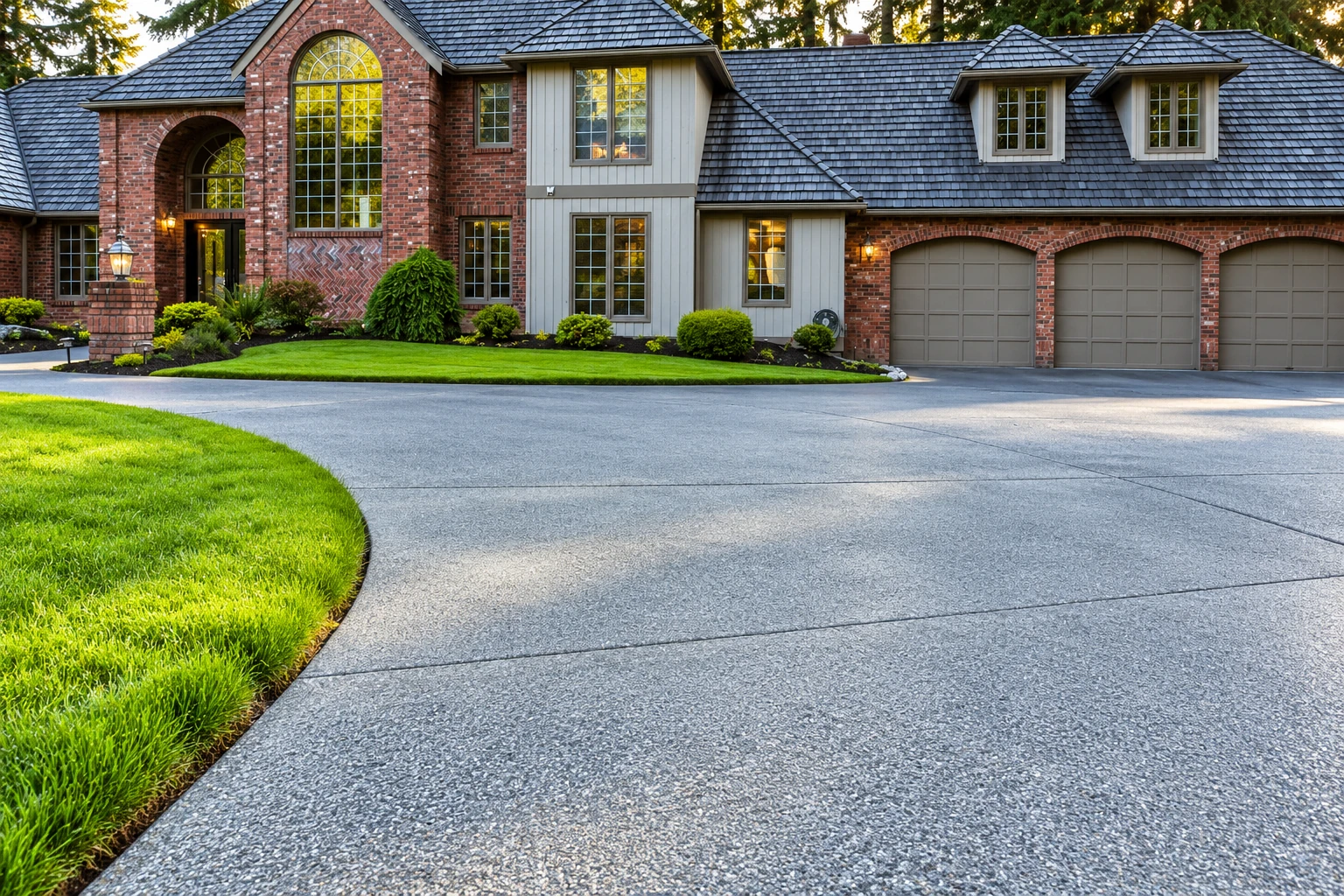
When the old driveway has split or sunk, we break it out, pack a new base and broom the top, a light texture that gives tires grip in the wet.
Caliber East Los Angeles Concrete is a concrete contractor in East Los Angeles. We build driveways, patios, walks, steps, retaining walls and foundations for homes, lots and buildings, starting with the ground the concrete sits on.
Caliber East Los Angeles Concrete builds driveways, patios, walks, steps, garage floors, retaining walls and foundations across East Los Angeles. Most of it is flatwork, the flat slabs you walk and park on, and most of it starts with breaking out an old slab that cracked or sank.
Homeowners call us about a driveway that's split down the middle, a patio that holds water after the hose runs, or front steps that have pulled away from the house. Owners of lots and buildings call about parking areas, walks and slabs that take heavy use. The fixes are different, but they all start in the same place, with the ground under the concrete.
Many houses here are older, on lots where the driveway runs narrow along the side of the house to a garage in back, so we plan how the concrete gets from the truck to the forms before pour day. We do the same work in the cities around East Los Angeles, like Montebello and Commerce, where the lots look a lot like these.
When the old driveway has split or sunk, we break it out, pack a new base and broom the top, a light texture that gives tires grip in the wet.
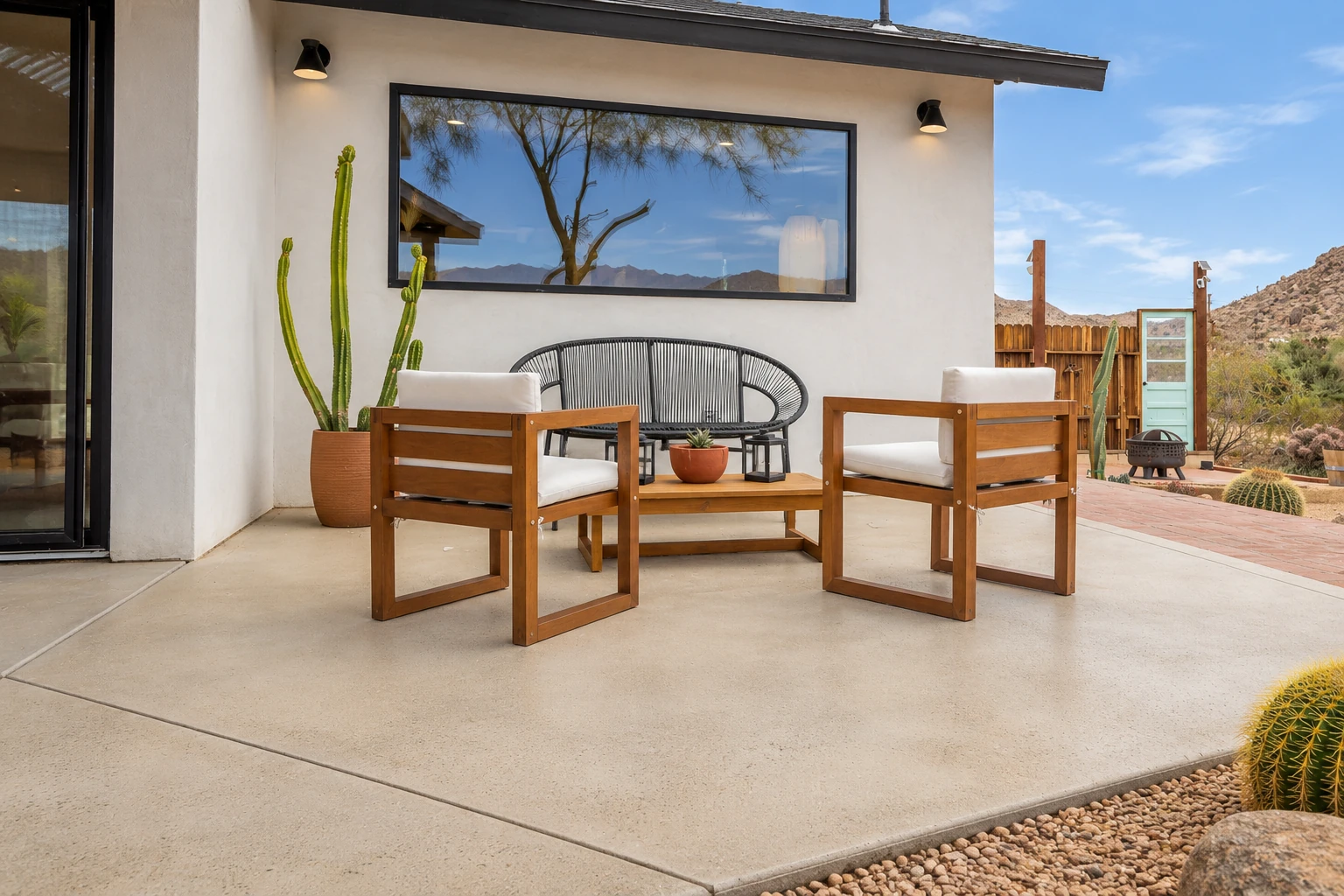
Back patios here usually go in where an old cracked slab or bare dirt was, so we size yours around how you use the yard, then set forms and steel.
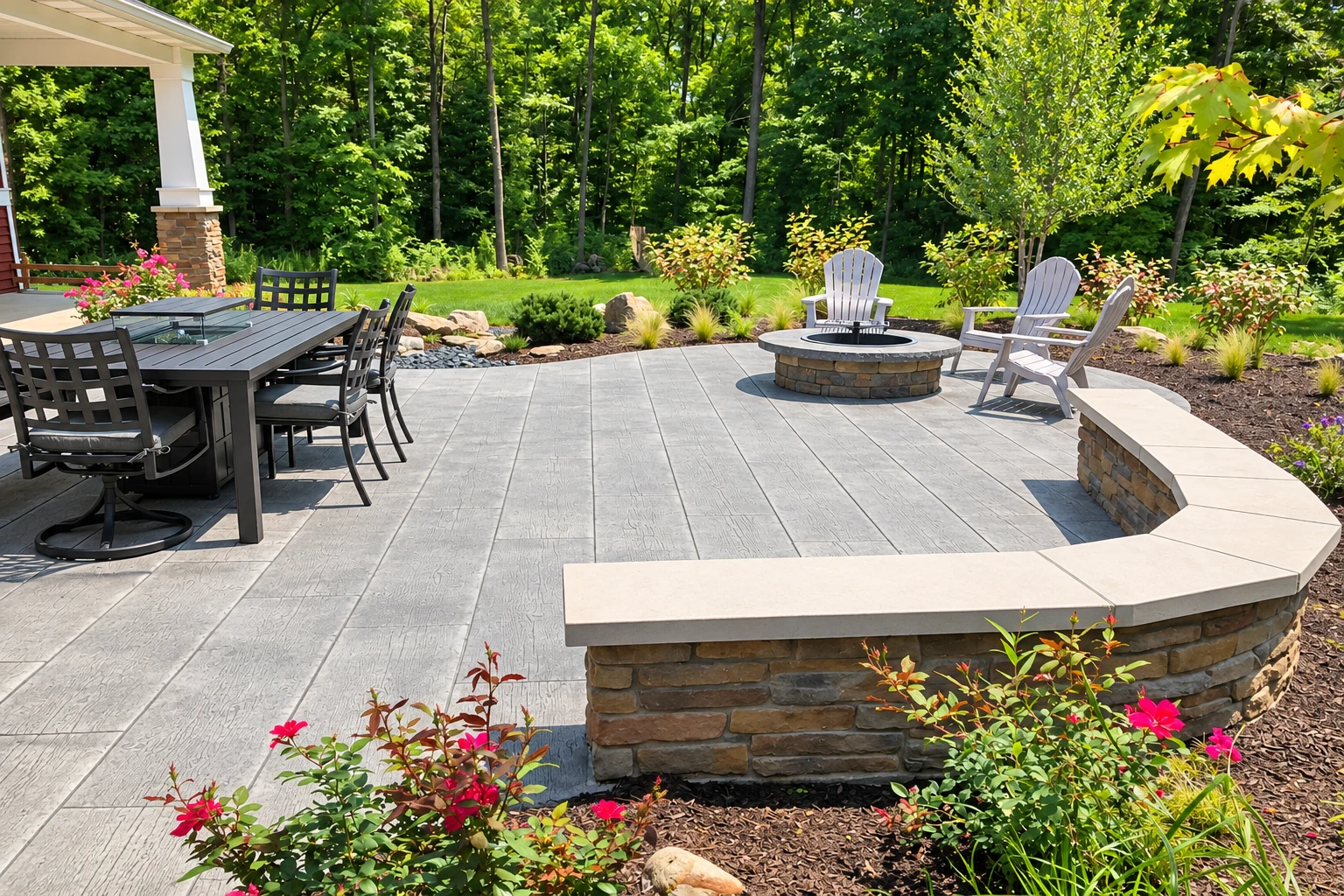
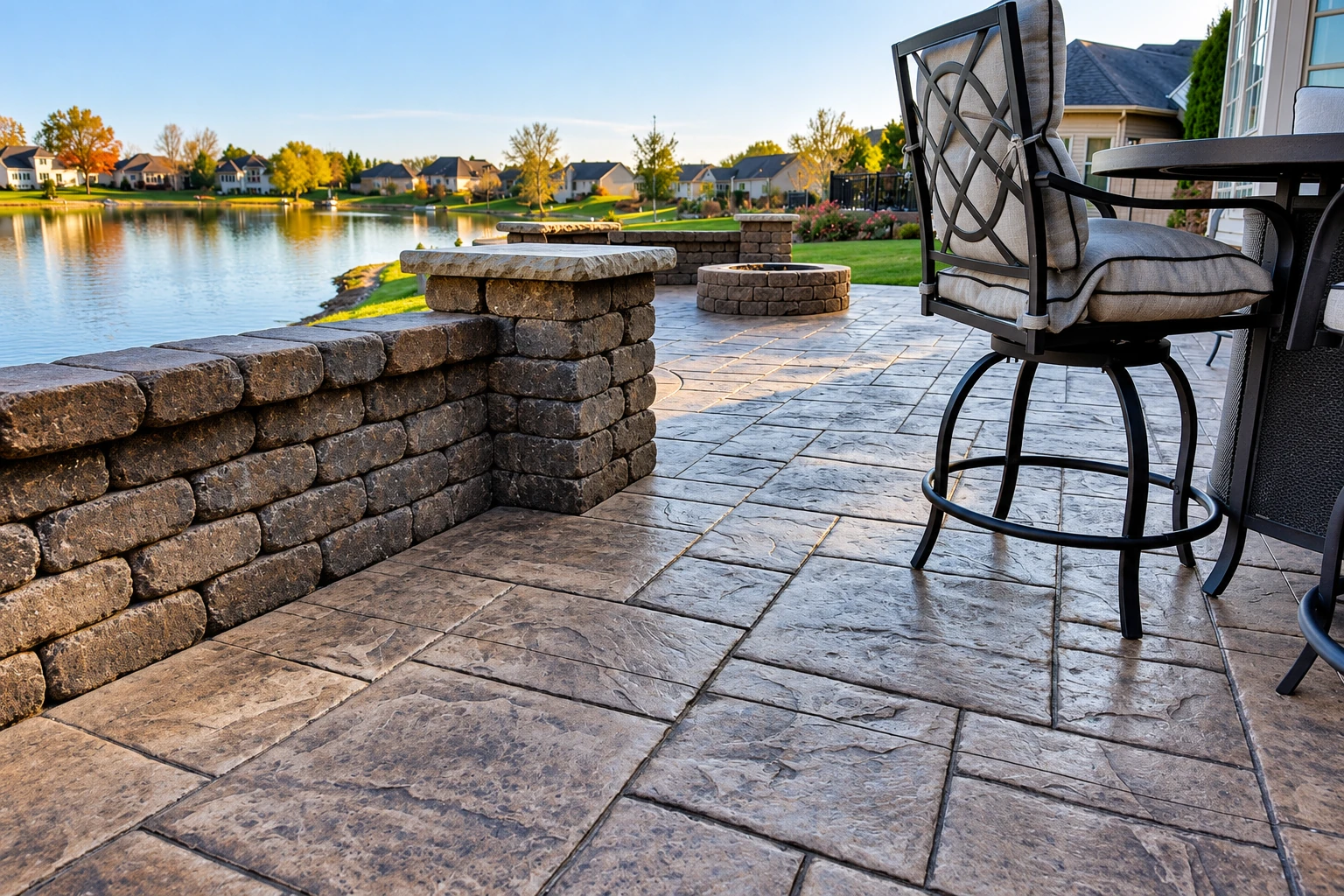
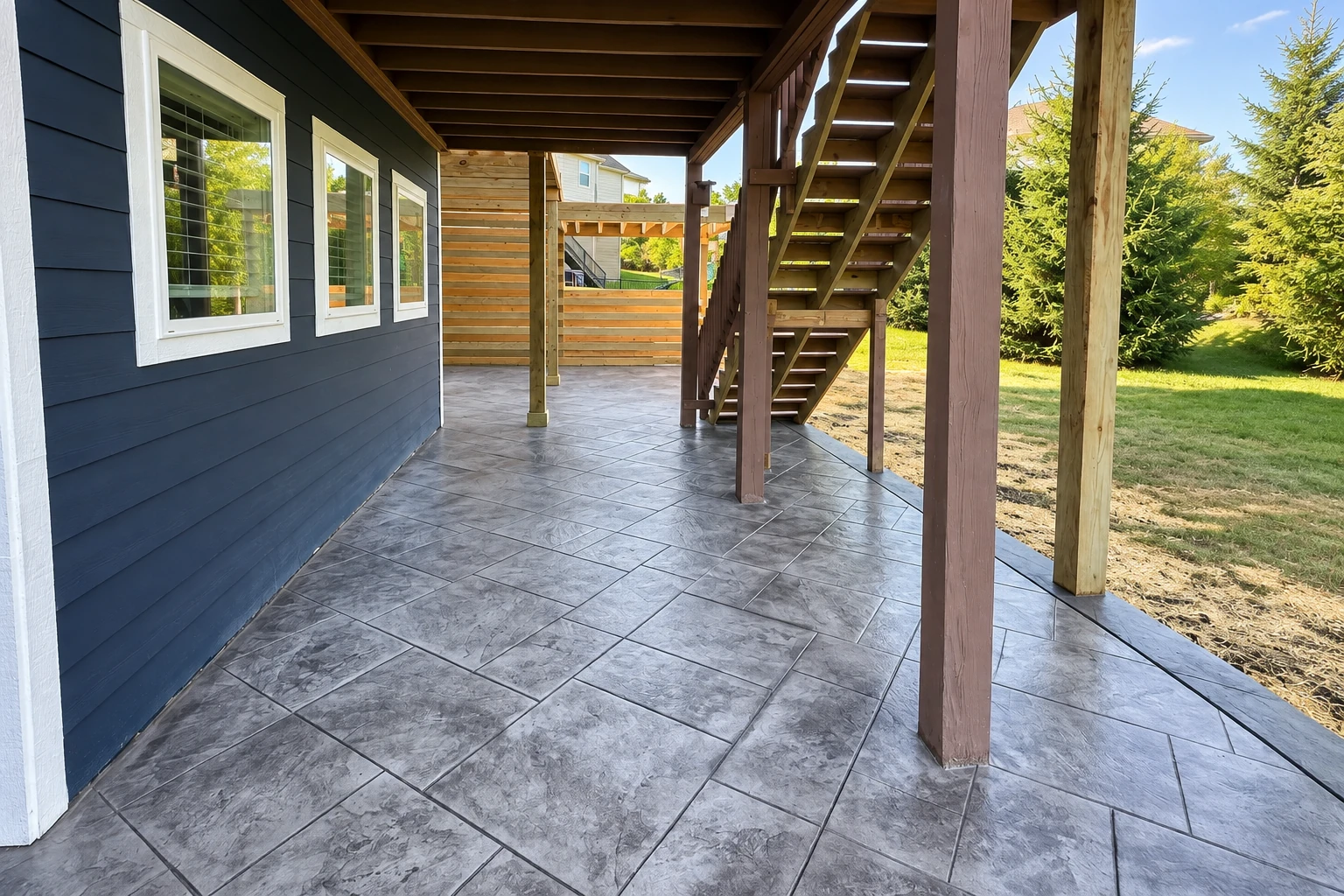
If you want the look of stone or brick on a patio or walk, we press a pattern into the fresh concrete over the same packed base as plain work.
For front walks lifted or broken by settling ground, we break out the bad sections and pour new ones that line up with what's staying.
If your garage slab is cracked, dusty or sloped the wrong way, we pour a new floor that drains toward the door and holds up under a parked car.
Color, exposed stone and custom borders help when plain gray doesn't suit the house, and we plan them so the finish never comes out of the base budget.
On sloped yards where dirt keeps sliding onto a patio or driveway, a poured wall with steel inside and drainage behind it holds the grade in place.
For slabs inside additions, workshops and commercial spaces, we set forms, steel and a vapor barrier, then finish the floor flat enough for what goes on it.
A pool deck needs grip underfoot and a slope that sends splash water to the drains, not back toward the pool or the house, so we form for both.
Front steps that have pulled away from the house or crumbled at the edges come out, and we pour new ones with even risers that are easy to climb.
For new homes, garages and back units, we build the slab foundation the way the plans call for it, with the steel and thickness the engineer drew.
When a building needs footings and stem walls under it, we dig, form and pour to the plans, so it sits on exactly what was designed for it.
Owners of lots and buildings call us for parking areas built to take steady traffic, with drainage that keeps water off the surface and out of doorways.
For posts, walls, patio covers and additions, we dig footings down to firm soil and set the steel ready for inspection, so the load rests on something solid.
When part of a house has settled and floors slope or doors stick, we figure out why it moved before we talk about lifting it back.
We saw-cut concrete for new doorways, plumbing trenches, driveway widening or pulling out a damaged section, leaving clean edges new concrete can tie into.
We get back to you within one business day to set a time. I come out to your place in East Los Angeles, walk the job, measure and give you a written quote that spells out what's included. The estimate is free and comes with no obligation.
(213) 338-1030East Los Angeles isn't its own city. It's unincorporated Los Angeles County, so permits here come from LA County Public Works through its East Los Angeles Building and Safety Office. Most cities around it, like Monterey Park and Downey, run their own counters. We check with the right office for your address before we set a date, and when your job needs a permit, we take care of it and the inspections.
Before you hire anyone, check two things. The Contractors State License Board licenses anyone who builds or alters structures in California, so ask for that license. A business located in unincorporated LA County also needs a County Business License if its work is one of the 110 activities the county licenses.
What moves the price is how big the slab is, how much old concrete we break out and haul off, how deep we dig to reach firm ground and how far the truck sits from the forms. The schedule turns on the permit, if your job needs one, and on curing, the days the concrete needs to harden before you use it. Your written quote spells out what's included, so you can see where the money goes.
I worked concrete every summer through school, next to finishers who'd been at it for decades, and I started this business in 2013. I still come out to look at the job and write the quote myself, and our crew lead runs the work on site with our own crew. We're fully licensed and insured, and the work is backed by our satisfaction guarantee.
When a budget gets tight, the first thing people want to cut is the base, because nobody sees it once the concrete's down. I'd keep the base and pick a plainer finish, since a stamped top on soft ground still sinks with the dirt. I'd rather lose a job by quoting it right than win it by skipping steps. Call (213) 338-1030 or use the form to set up a visit.
Most jobs here start with the same questions about what's under the old concrete, where the water goes and what the county will want to see. Here's how each one shapes the work.
A lot of what we break out in East Los Angeles was poured on dirt that was raked level and never packed. The subgrade, the ground the slab sits on, kept settling, and the concrete went down with it. We dig past the loose fill to firm ground and compact the base in layers before the forms go up, because that's what keeps the new slab from following the old one down.
Before we set a form, we look at where water runs now. An old patio or driveway that ponds or tips toward the house keeps sending water against the foundation. We set the forms so the new slab falls away from the house, toward the street, a drain or open ground, and you can see the slope on our string lines before anything is poured.
When you apply for a county permit, the office tells you whether the job needs a plan check, a review of the drawings before work starts, and what it takes to get it approved. Foundations, retaining walls and slabs under a building usually come with drawings. That review adds time before the pour, so we plan the start date around it instead of guessing.
LA County Planning lists three plans for East Los Angeles: a community plan, a community standards district and a specific plan for 3rd Street. If your project is bigger than a patio, like a new foundation or a parking area, it can fall under one of them. That's one more reason we check with the county about your address before we set a date.
Patios, retaining walls, pools and grading work are on the county's list of permit items, so plan on a permit for those. Driveways and walks aren't named on the county permits list, so we ask the office about your address before we give you a start date. Even work that's exempt from a permit still has to meet the Building Code.
Yes, the state requires one when a job needs a building permit, uses any additional workers or totals $1,000 or more in labor and materials, and a driveway or patio passes that easily. Contractors have to be licensed before they even bid, so ask for the license with the quote. You can check it with the state licensing board.
The first inspection has to be requested within 12 months of getting the permit, and follow-up inspections every 6 months keep the permit active. On a concrete job, inspections usually come before the pour, while the forms and steel are still open to see. When your job needs a permit, we book the inspections as the work goes.
The state caps a down payment on home improvement work at $1,000 or 10 percent of the contract price, whichever is less. After that, payments are listed in the contract and tied to work completed or materials delivered. That rule covers a driveway or patio the same as any other home improvement project.
There's no honest number until I've measured, so you get a written quote at your property. The part that surprises people is breaking out and hauling off the old slab, which you pay for before any new concrete goes in. A stamped finish adds to the cost, and a plain broom finish keeps it lower.
You'll walk on it well before you drive on it, because the concrete keeps curing and gaining strength for days after the pour. I tell you the wait for your slab with the quote, so you can plan where to park. Before we start, move the cars out, clear the area and show us where any sprinkler lines run.
It shouldn't crack and sink the way the old one did, because most of that comes from a soft base, and we dig out and pack the ground first. Rebar, steel bars set inside the slab, holds it together if a crack starts. Control joints, grooves we cut while the concrete is fresh, give it a straight line to crack along instead of a random one.
Our hours run 7 AM to 11 PM, seven days a week, so you can call (213) 338-1030 after work or on a weekend, or send the form whenever it suits you.