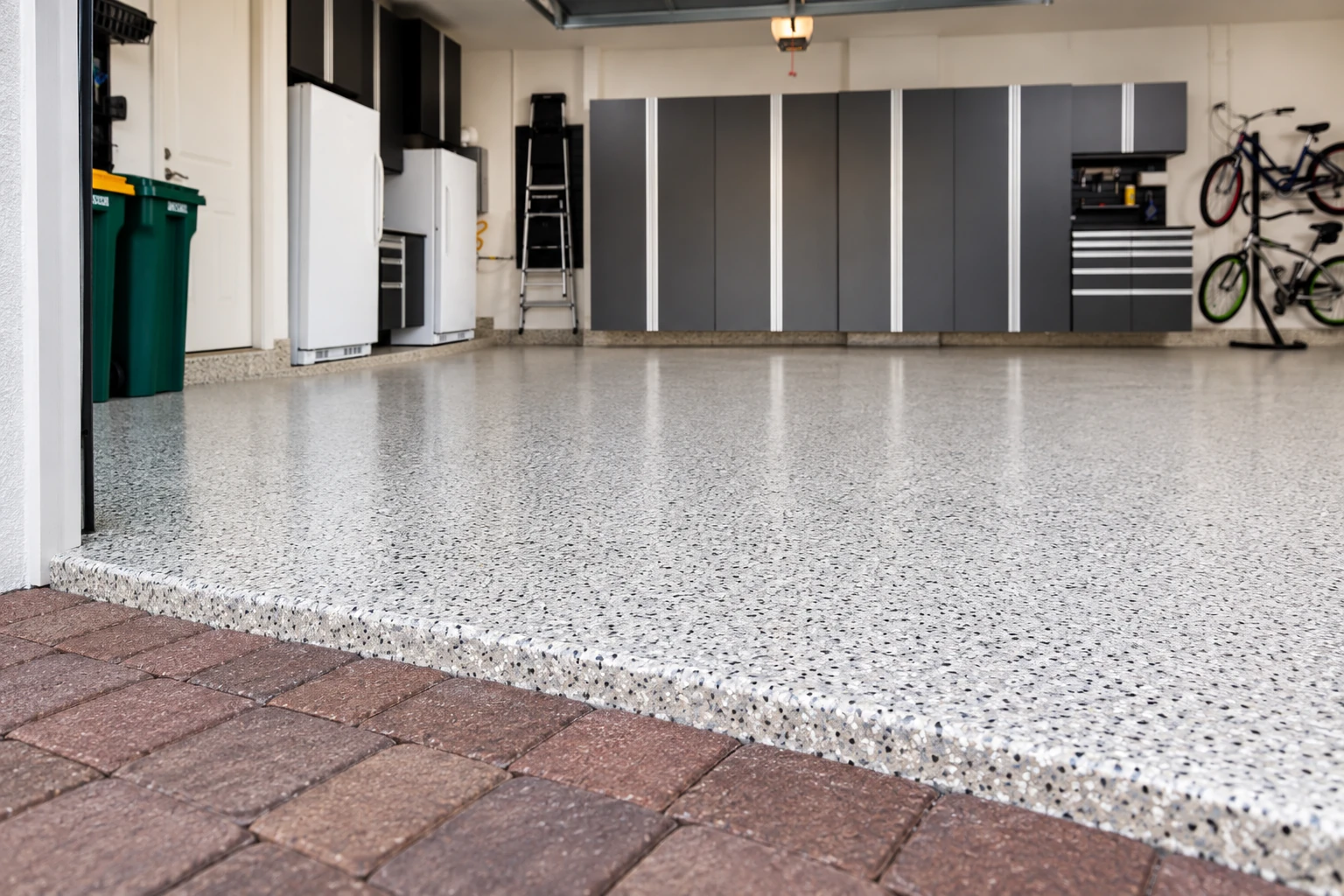
Before we dig anything, I ask how you'll use the garage. A floor that's getting a coating, or might hold a car lift someday, needs different work under the slab and a different build than a plain parking floor. Tell us before the pour, not after, because once the concrete's down, changing what's under it means starting over.
The part I won't cut corners on is the base. Nobody sees it on day one, so it's the first thing a tight budget goes after, and it's the reason slabs sink and crack later. We dig out and pack the base instead of raking dirt level. If money's tight, I'd rather keep the finish simple than skimp on the prep.
On pour day we watch the weather, because high heat, low humidity and wind change how concrete behaves from the truck to the trowel. On those days we usually pour early, since a top that dries too fast turns weak and dusty later. We cut control joints, shallow grooves that give the slab a planned place to crack, on time so cracks land where we chose. Then it cures, the setting period that gives it strength, before anyone parks on it.
Garage work often runs into the rest of the property. If you'd like the floor or the apron by the door to look like more than plain gray, ask about decorative concrete. Where a garage is cut into a slope and the dirt beside it needs holding back, we also build concrete retaining walls, so both can be planned as one job.