Concrete driveway building
When an old driveway has cracked, sunk near the street or sends water toward the garage, we tear it out, dig and pack the base, and pour it new.
Caliber East Los Angeles Concrete is a concrete contractor working in Montebello, CA. We pour driveways, patios, walks, steps, garage floors and foundations, and we spend most of our time on the ground prep underneath.
Caliber East Los Angeles Concrete builds and replaces driveways, patios, walks, steps, garage floors and foundations across Montebello. A lot of what we get called for here is an old driveway or patio that has cracked, sunk or started holding water. We also handle flatwork, the slabs people walk and park on, for lots and buildings.
A lot of Montebello is older houses on established streets, and the concrete around them has been down a long time. A typical call here is a front driveway cracked across the middle, a side walk to the backyard that has lifted, or a back patio poured thin years ago that's now broken into pieces. We also pour parking areas, floors and foundations for owners of lots and buildings.
We're based in East Los Angeles and work Montebello the same way we work Monterey Park and Pico Rivera. Small jobs get the same prep as big ones. A walk out to the trash cans gets dug, packed and formed like a two-car driveway, because the ground under it doesn't care how big the job is.
When an old driveway has cracked, sunk near the street or sends water toward the garage, we tear it out, dig and pack the base, and pour it new.
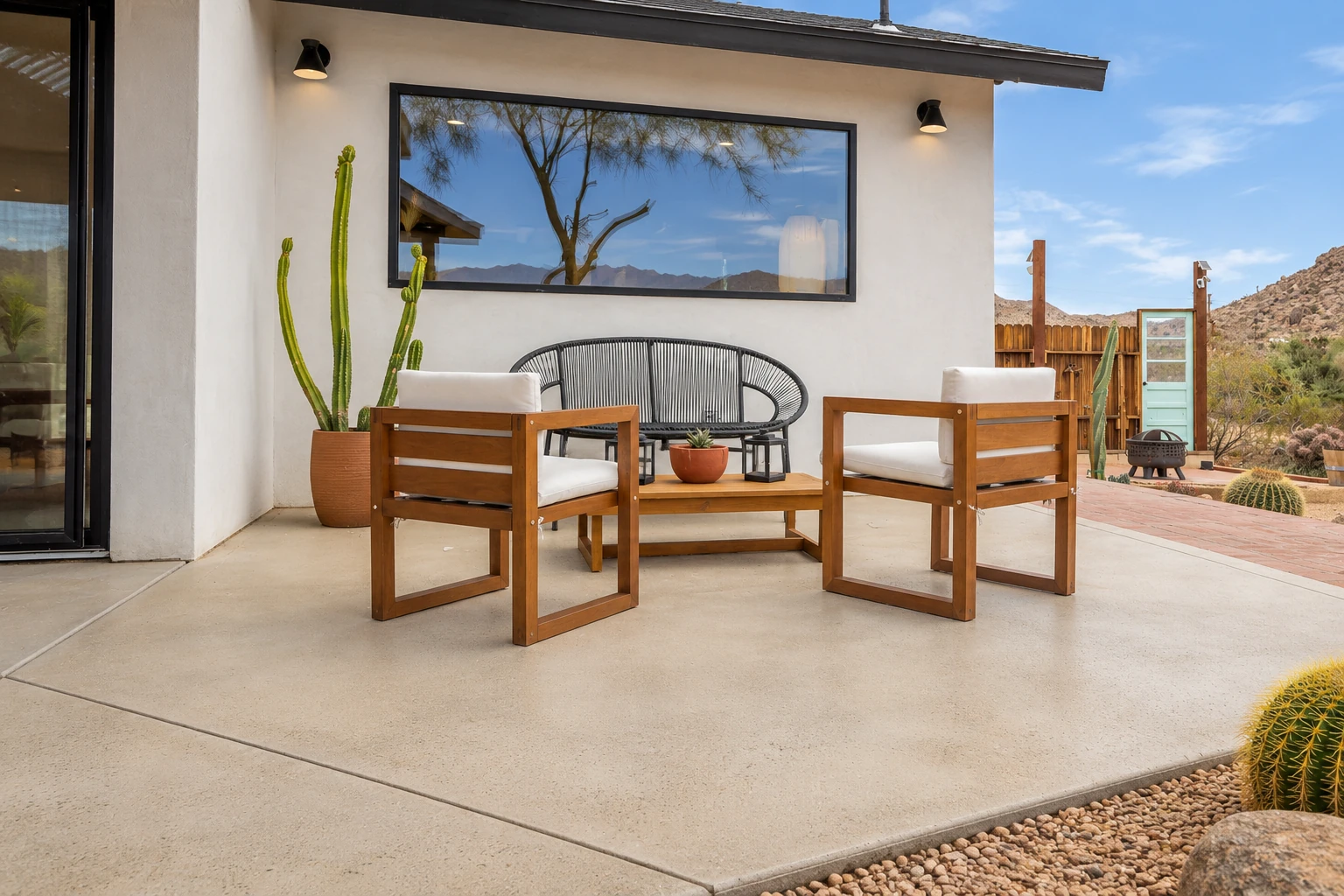
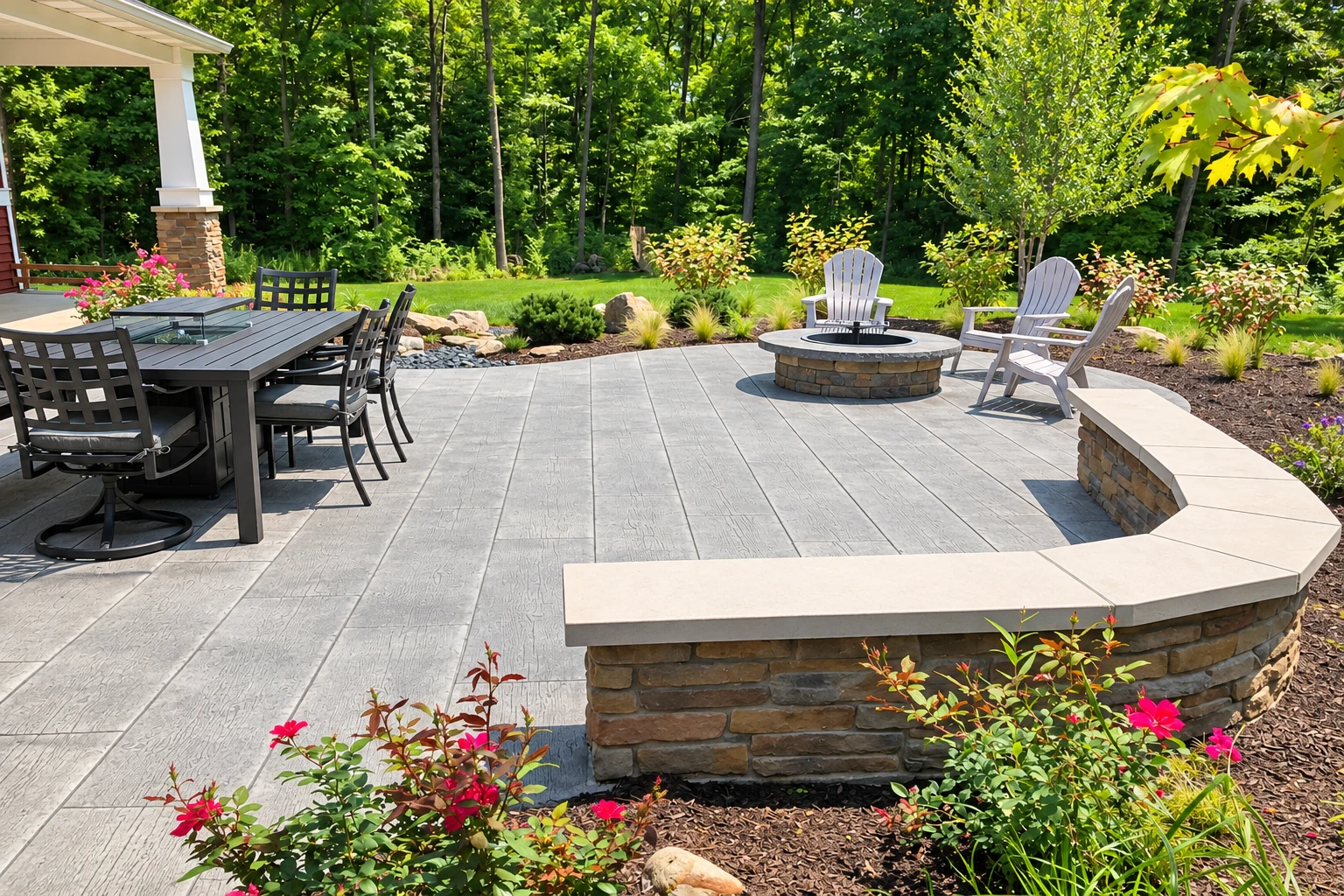
For a backyard that's bare dirt, shifted pavers or an old patio sloping toward the house, we pour a new slab pitched so water runs away.
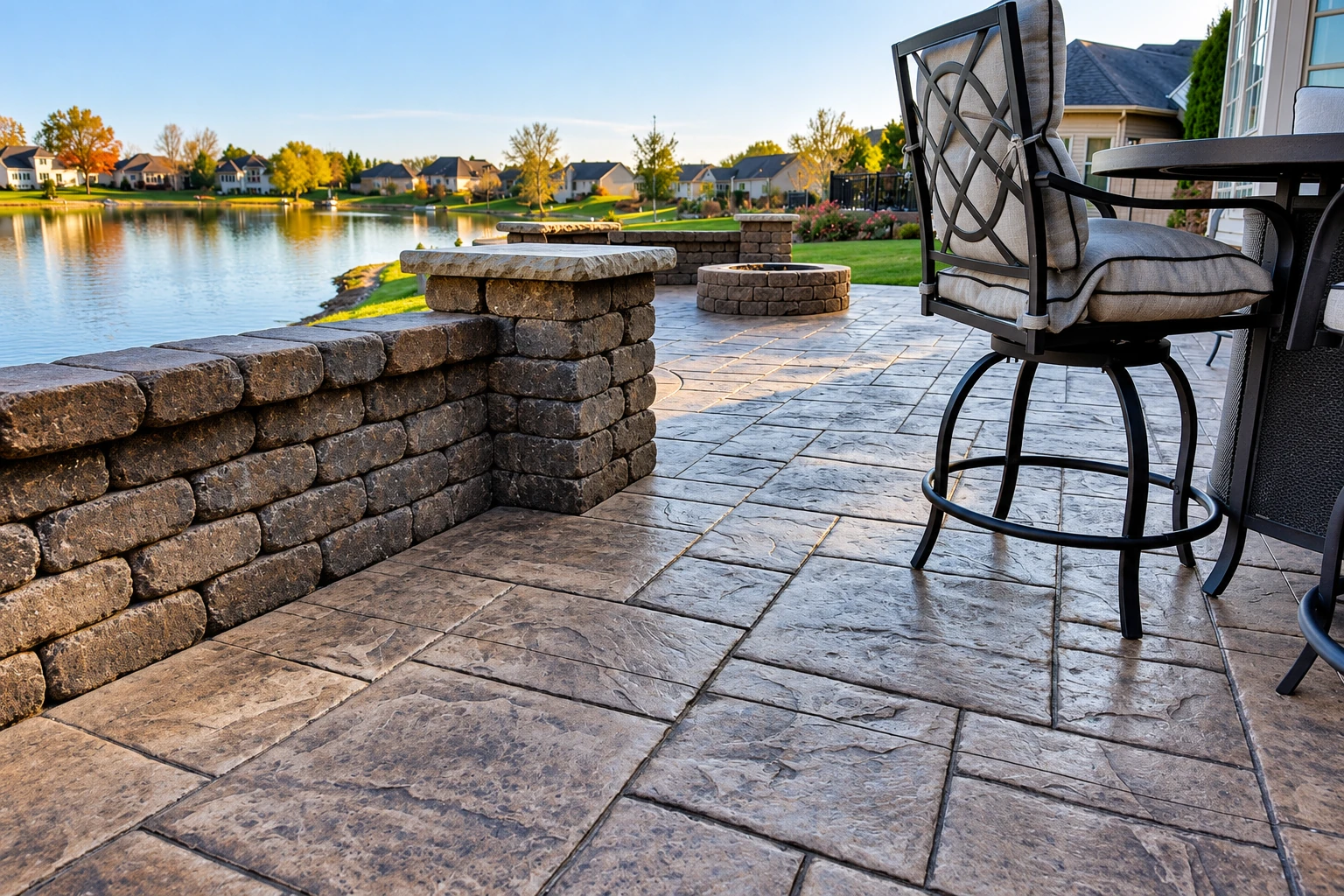
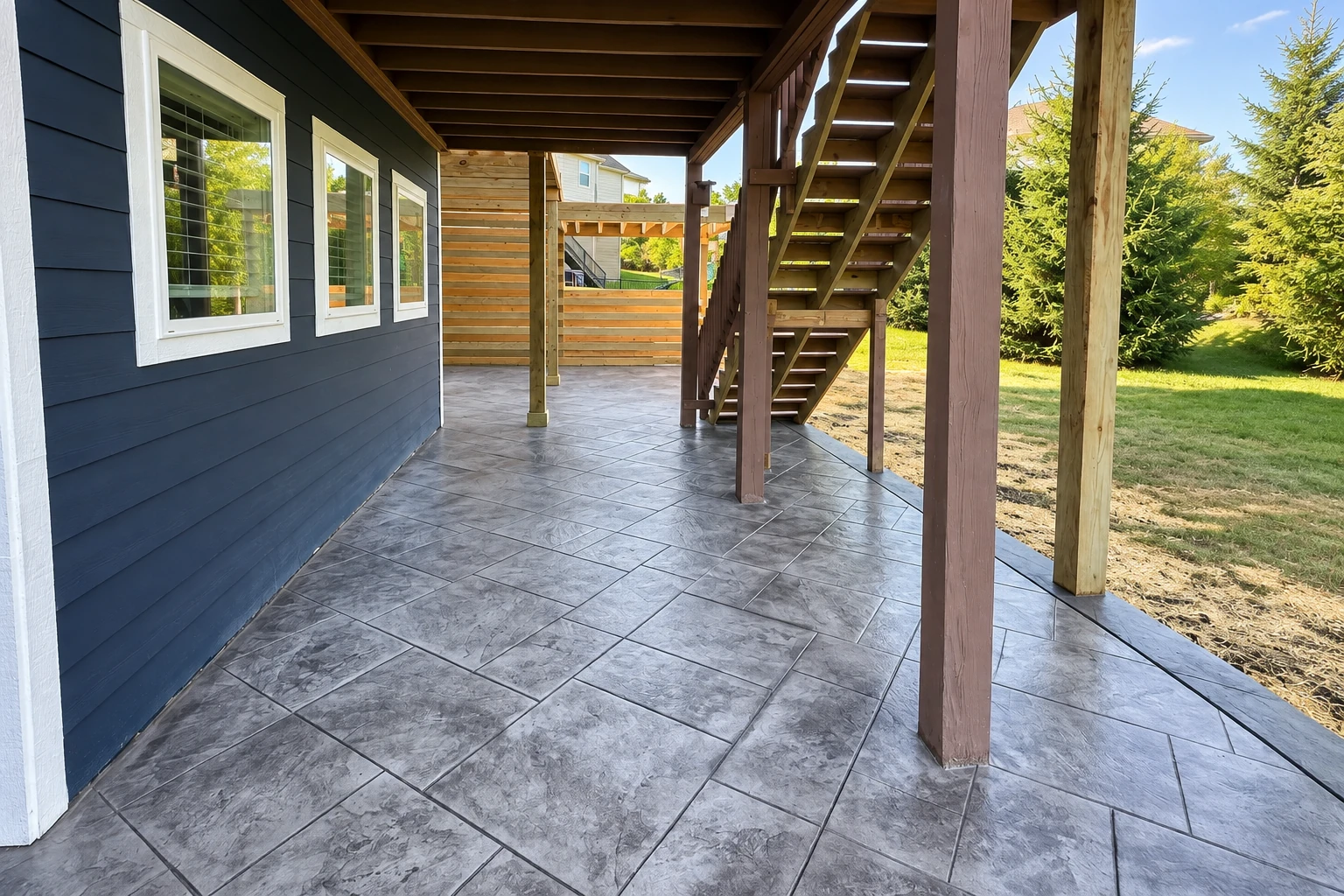
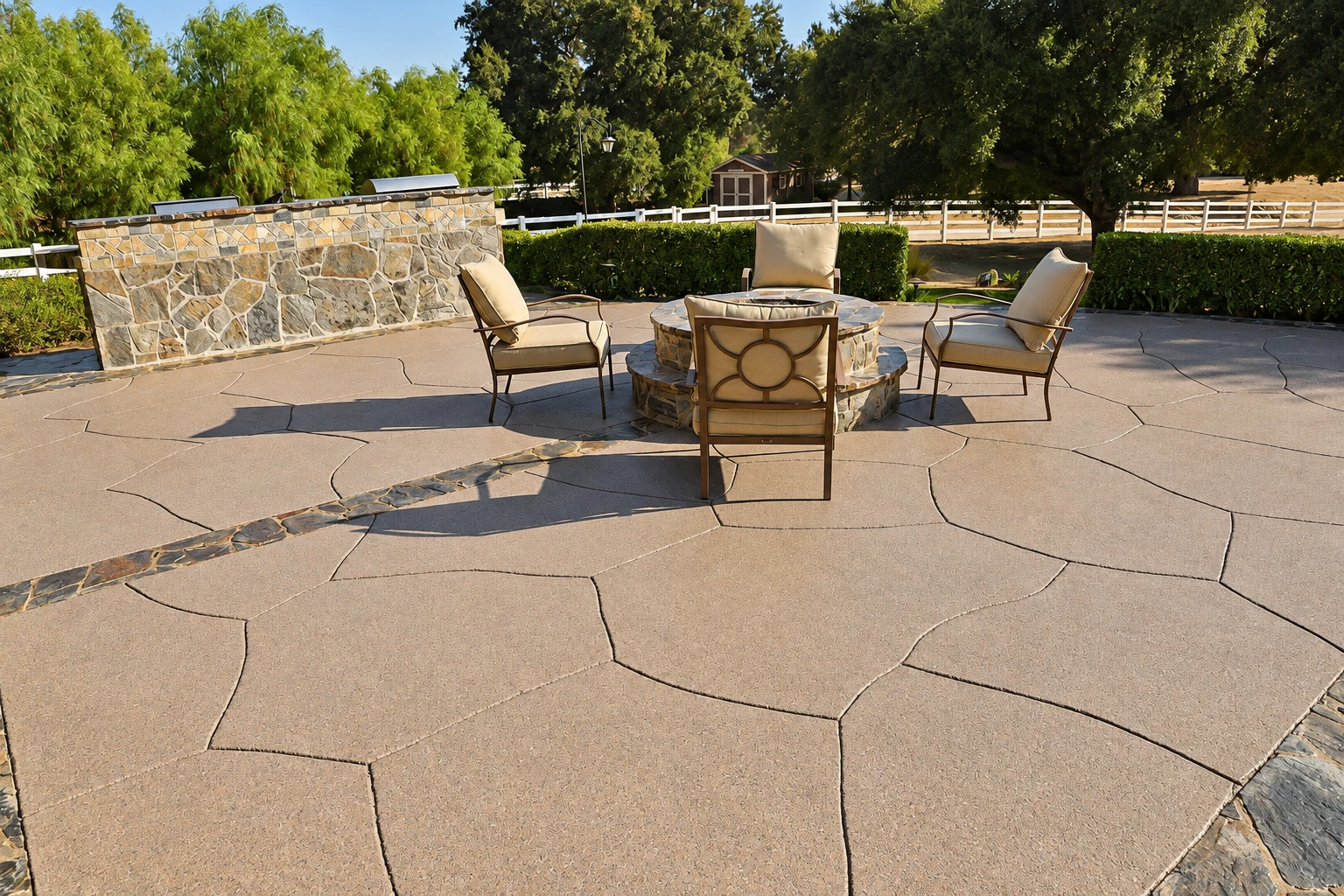
Stamped concrete presses a stone or brick pattern into the wet surface, a good fit for a front walk or patio that people see every day.
Side walks to the backyard and front walks that have lifted or broken into a trip hazard get torn out and poured new on a packed base.
A garage floor that's cracked, oil-stained or sunk in spots gets broken out and poured again, built to carry the car and the shelving along the walls.
Color, exposed stone or a smooth troweled finish for the spots near the house where plain gray concrete would look out of place.
On a yard with a grade change, a concrete retaining wall holds the soil back so it stops sliding onto the patio or driveway below.
Interior slabs for additions, workshops and buildings, poured flat and level so flooring goes right on top or the bare floor works as is.
Around a pool the deck has to drain away from the water and give wet feet grip, so we pitch it carefully and skip slick finishes.
Front and back steps that have cracked, pulled away from the house or feel uneven to climb get formed and poured again, with steel tying them together.
For an addition, a garage or a new building, we build the slab the way the plans call for it, from the base and steel to the final pour.
Foundations for new homes, additions and backyard buildings, dug, formed and poured to the plans so the framing above sits square.
For owners of lots and small commercial buildings, we pour parking areas thick enough for daily traffic, with drainage set so water leaves the lot.
Footings under walls, posts, patio covers and additions, the buried concrete that spreads the weight out so whatever sits on top doesn't settle.
When part of a house or slab has settled and doors stick or floors slope, we find what's moving underneath and bring it back toward level.
Clean saw cuts for a new walkway opening, a trench for a utility line, or removing a damaged section without breaking up the rest of the slab.
Send the form and we'll get back to you within one business day to set a time. I come out to your Montebello property myself, walk the job, measure and give you a written quote that spells out what's included. The estimate is free and there's no obligation.
(213) 338-1030In Montebello, the city's Building and Safety Division issues building and grading permits, and it asks that you check with it before any project starts to learn whether approvals, permits and inspections apply. When your job needs a permit, that comes first, so it sets how soon we can pour. Before you hire anyone, ask for their state license and look it up with the California Contractors State License Board.
We check with the right office for your address before we set a date, whether you're here, in Downey or back in East Los Angeles, where the county handles it. When your job needs a permit, we take care of it and the inspections that go with it.
Price comes down to size, how much old concrete we break out and haul away, how much digging and packing the ground needs, how thick the slab is, whether it carries rebar, steel bars that hold the slab together if it cracks, and the finish you pick. The schedule turns on the permit, the tear-out and curing, the time concrete needs to harden before you use it. My written quote spells out what's included.
I started this business in 2013, after working concrete every summer through school, hauling forms and finishing next to guys who'd done it for decades. I still come out and write the quote myself, and our crew lead runs the work on site with our own crew. We're fully licensed and insured, and every job is backed by our satisfaction guarantee.
The time goes where nobody looks once it's poured: digging out, packing the base, setting forms and checking where the water runs. Those steps cost more up front than skipping them, and I'd rather lose a job by quoting it right than win it by cutting them. If you've got a cracked, sunken or pooling slab, call (213) 338-1030 or send the form and I'll come look.
Most of the broken concrete we tear out here started going wrong under the surface or at the edges. These are the four things we look at on a Montebello job before the forms go in.
Replacement starts with taking the old concrete out completely and hauling it off. Pouring a thin layer over a cracked slab usually just copies the cracks, because whatever moved the old one is still moving. Once it's out, we can see the dirt underneath, and that usually shows why it failed, whether it's soft ground, roots or loose fill that was never packed.
The subgrade, the dirt the slab sits on, decides how long a slab lasts. The common shortcut is to rake it level and pour, and that loose dirt keeps settling under the weight of a car until the slab sinks and cracks with it. We dig out soft material, bring in base rock and pack it in layers so the concrete has something firm under it.
A slab that falls toward the house sends rain to your foundation or garage door, and water that sits on concrete wears the surface down faster. Before we set forms, we check where the water runs now and where it needs to go. Then we pitch the slab toward the street, a drain or the yard, so it leaves instead of pooling.
Control joints are grooves cut into the slab so it cracks along a straight line we picked, not across the middle. They have to be cut on time, because a slab that's left too long cracks wherever it wants. We also plan the pour so the crew isn't racing midday heat, since a rushed finish leaves a weak, dusty top that chips later.
Your cost comes from a written quote I give after measuring your driveway, and it spells out what's included. If the budget's tight, trim the finish, not the base. A plain broom finish, the light texture that gives tires and shoes grip, holds up fine, but no finish saves a slab whose base settles.
You'll be off a new driveway longer than a walk or patio, because concrete keeps curing for days after it looks hard and a car's weight on a young slab can crack it. Tear-out and base work come before the pour, so plan somewhere else to park for a stretch. We'll go over the wait at the estimate.
Concrete can still crack, but a well-built slab cracks along the joints we cut for it, where a hairline won't show or spread. Most of the broken slabs we tear out had a base that settled or joints cut late or skipped, and those are the two things we don't rush.
Every permit the city issues comes with an inspection record that lists the inspections your job needs, based on the work and the permit type. Each item on it has to be inspected before the work gets covered, which on concrete usually means before the pour. We schedule those inspections and hold the pour until they're done.
Usually, yes. In California a contractor needs a state license when the job needs a building permit, uses employees, or totals $1,000 or more in labor and materials across one or more contracts. A bigger job can't be split into small contracts to get under that line, so ask for the license on any quote and check it with the state board.
Move cars off the driveway and clear pots, furniture and anything stored along the work area before the crew shows up, since we need room to tear out, dig and set forms. Tell us about sprinkler lines or anything else buried that you know of, and plan where you'll park while the slab cures.
We're open 7 AM to 11 PM every day, so you can call (213) 338-1030 after work or send the form tonight, and we'll set up a time to come look.