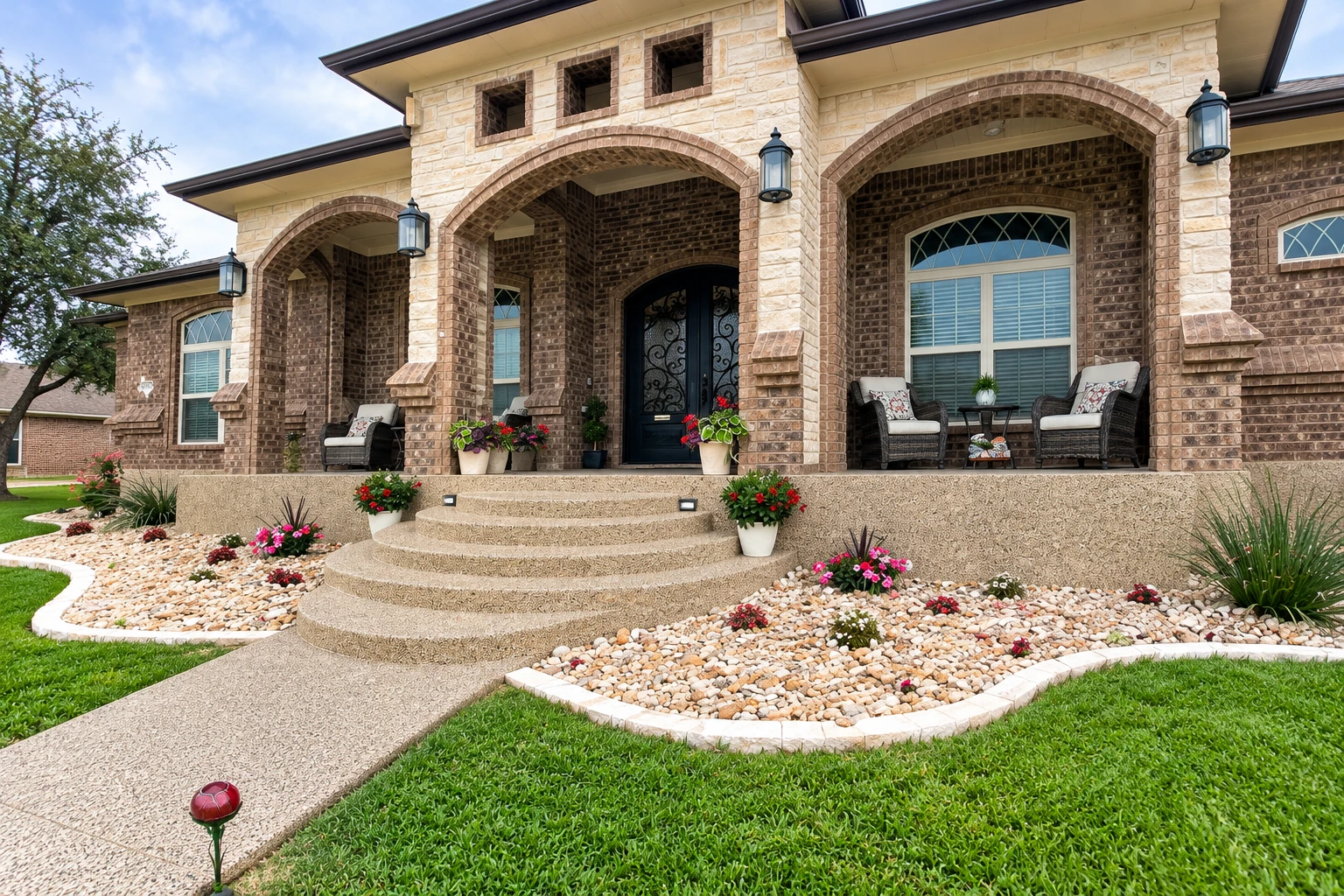
Most calls start with a walk somebody trips on. One slab has sunk, another has lifted, a crack is wide enough to catch a heel, or water sits in a low spot after the sprinklers run. Usually the concrete itself isn't the problem. The ground under it settled unevenly, a tree root pushed it up, or nobody planned where the water would go.
The price moves with the size of the walk, whether old concrete has to be broken out and hauled off, how much digging the base needs and how hard the spot is to reach. Curves and steps add to it. The schedule turns on the same things plus curing, the wait while new concrete gains strength before you use it. Your written quote spells out what's included.
A sidewalk is flatwork, the flat concrete like walks, patios and driveways, and the state licensing board counts forming, pouring and finishing it as a concrete contractor's work. Flatwork that stays flat is what we're best known for. On a walk, that comes down to what's under it, which is why so much of my quote covers the ground and not the surface.