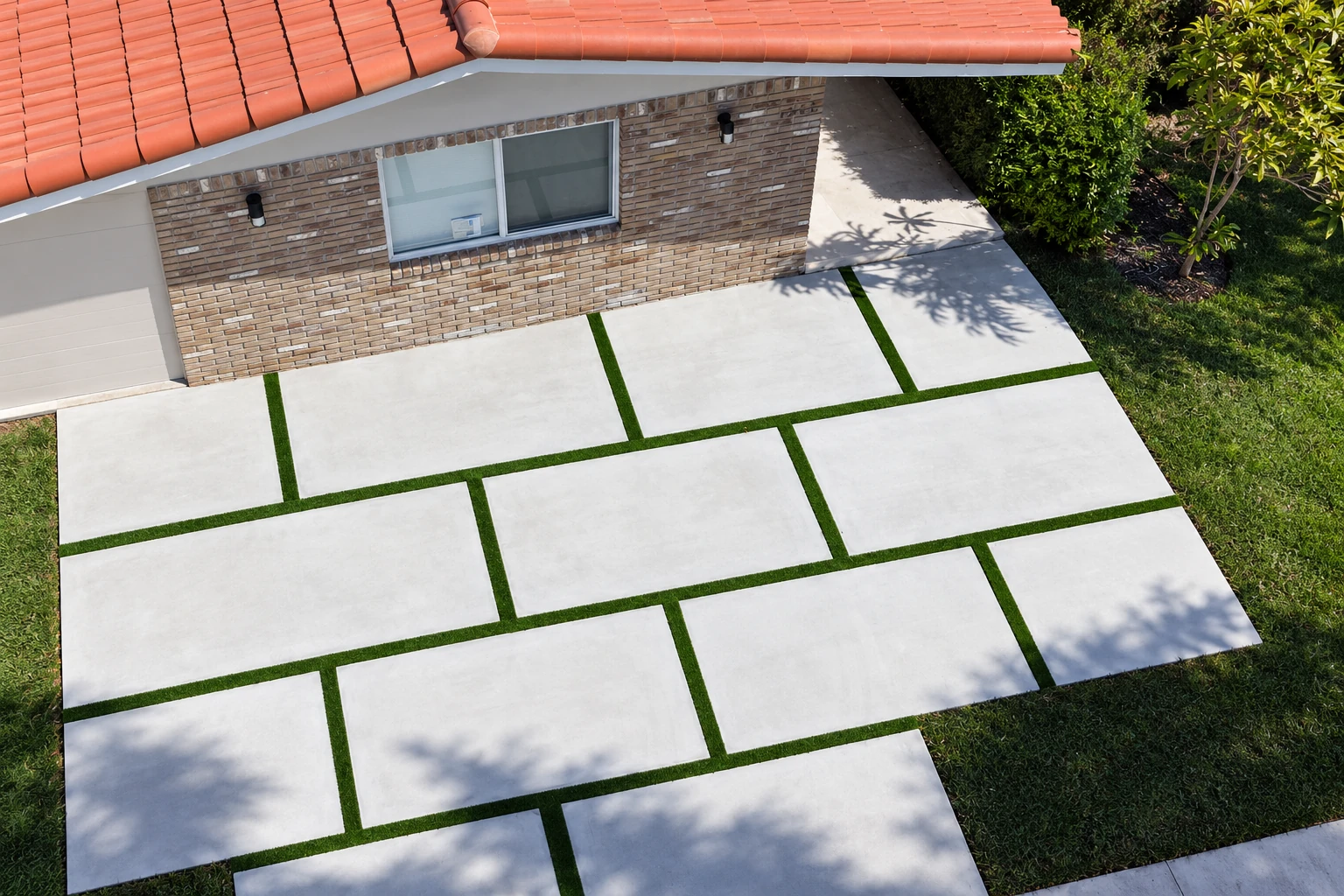
Most of what decides how decorative work holds up is prep and sealing. So we take the time to get the surface ready before any sealer touches it, and I help you pick a sealer for the look you want. After that, I'll tell you to reseal when the surface needs it, not because the calendar says so.
On a new slab, our crew digs out, packs the base and sets rebar where the job calls for it, steel bars that hold the slab together if it cracks. We plan pours for the cooler part of the day, because midday heat can leave a weak, dusty top that sealer won't grab well, then stamp the pattern while the concrete is still workable.
Decorative work often comes with other concrete. If your patio steps down a slope, concrete retaining walls hold the ground back so the slab has a level spot to sit on. If part of the project is indoors, like a converted garage or a new room, concrete floor installation gives you a flat, solid slab to finish.
If the budget gets tight, cut the pattern before you cut the base. The base is buried on day one and nobody sees it, which is why it's the first thing people want to trim. But a fancy finish on a base that settles cracks and sinks anyway, and you can't fix it without tearing it out. A simpler stamp on a solid base is the better deal.