Caliber East Los Angeles ConcreteCaliber East Los Angeles Concrete

Foundation Installation in East Los Angeles CA - built to fit your lot and your soil

Building new on your lot? We pour the foundation your soils report and engineer's plans call for, so the house starts on solid ground.

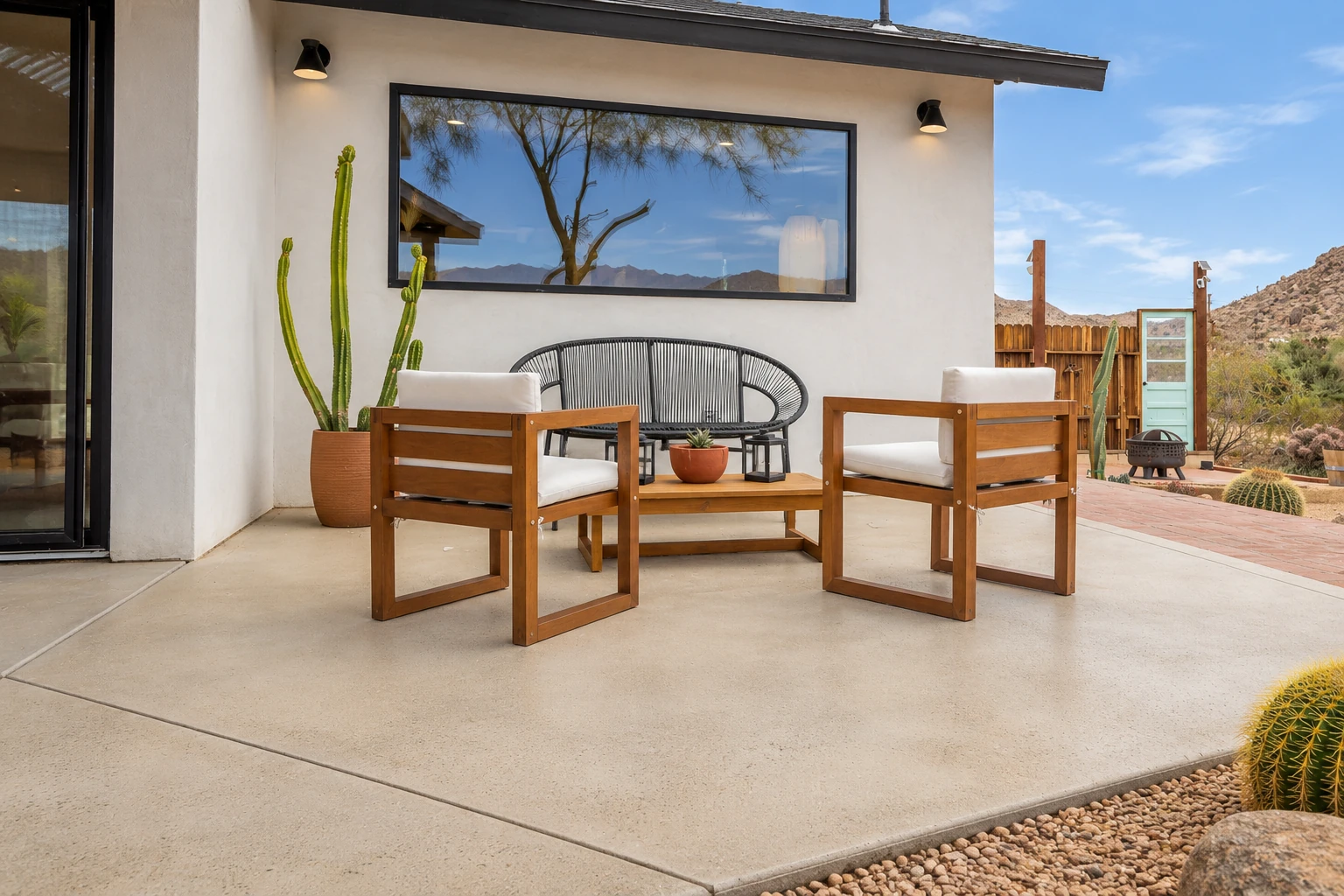
A smooth concrete patio with control joints holds wooden chairs and a black bench beside a modern home.

Foundation installation in East Los Angeles, CA is the concrete your house stands on, formed, poured and finished before the first wall is framed, and we build it to fit your lot, your soil and your plans.

What does a new foundation take in East Los Angeles?

Most people who call me have a lot, a set of plans and a question about where to start. We're based in East Los Angeles and work in the cities around it, like Montebello, Downey and Monterey Park, and the first step is the soils report, a study of the ground under your site. Your engineer designs the foundation from that report.

Price moves with the type of foundation, how much your lot slopes, how much digging and hauling it takes, and how deep the plans go and how much steel they call for. The schedule turns mostly on paperwork, since the soils report, the plans and any permit all come before we can set a pour date. Your written quote spells out what's included for your lot.
What shapes the foundation under your house

Beyond picking a slab or a raised floor, three things decide most of the foundation jobs I quote. Here's what each one is and why it matters before the concrete truck shows up.

Built to the engineer's plans

Your engineer's plans set the depth, the size of each footing and the rebar, the steel bars inside that hold the concrete together when the ground moves. We set the forms and the steel to those plans. Anything on site that doesn't match gets sorted out with your engineer before the pour, not after.

Lower price now, more risk later

Shallow foundation systems cost less up front, and that's often why people pick them, but they usually carry more risk of trouble later than deeper ones. As a system's cost goes up, its risk typically comes down. I'll show you where your design sits on that line so you make the call knowing what you're trading.

Where the water goes

Water that sits against a foundation soaks the ground it rests on, and wet ground is the ground that moves. We check how your lot drains and make sure the finished work sends water away from the house, because that's cheap to get right now and expensive to fix once the walls are up.

What happens when you call us about a new foundation?

From the first call to the final walk-through, here's who you'll deal with at each step and what you'll have in hand before any digging starts.

  1. 1

    Call or send a message

    Call (213) 338-1030 or use the contact form, and tell us your address, whether the lot slopes and whether you have a soils report yet. We'll get back to you to set up a visit.

  2. 2

    I walk your lot and quote

    I come out myself, measure, look over your plans, ask how you'll use the building and find out which office handles your address. Then you get a written quote that spells out what's included.

  3. 3

    Our crew lead runs the job

    Once the plans and any permit are set, our crew lead runs the work with our own crew, from digging out and packing the ground to setting forms and steel and pouring the concrete.

  4. 4

    We walk the finished foundation

    Before we pack up, I walk the finished foundation with you and the crew cleans up the site. Framing can follow once the concrete has cured, the wait that lets it gain strength before it carries weight.

Request an estimate

How we approach foundation installation

We start from the soils report and the engineer's plans, then match the foundation to your lot and your budget. I'll walk you through the trade-offs between a slab and a raised foundation in plain words, what each one costs you on day one and what it means for the house down the road, so you pick knowing what you're giving up.

What decides whether a foundation holds up is the part nobody sees once it's poured. We dig the subgrade, the ground the concrete sits on, to what the plans call for and pack it, because loose dirt raked level settles later. That's the first place a low bid cuts. I'd rather lose a job by quoting it right than win it by skipping steps.

Not every job is a whole house. An addition, a garage or a covered porch may only need concrete footings, the strips or pads of concrete that carry the walls and posts, and we pour those on their own. For owners putting up a commercial building, we also handle concrete parking lot building on the same site, so one crew covers the concrete work.

A slab on a flat lot

On flat ground, a slab is the economical, quick pour. A post-tensioned slab, with steel cables tightened inside it, generally takes less labor and forming than a deep raised foundation, so it keeps your starting cost lower when budget comes first.

A raised floor with a crawlspace

A raised foundation leaves a crawlspace under the floor, so plumbing, electrical and mechanical lines stay within reach when you remodel or need a repair later. On a slab, those lines end up buried in concrete.

Get a written quote for your new foundation

Send your address, a note on whether the lot slopes and your soils report if you have one, and we'll get back to you within one business day to set up a visit. I come out, measure and look over your plans, and you get a free written quote with no obligation.

(213) 338-1030

contact@eastlosangelesconcrete.com

Foundations and permits in East Los Angeles and nearby cities

East Los Angeles goes through the county, so LA County Public Works issues building permits here. Its permit list names new construction and grading, not foundation installation on its own, so the list doesn't settle what your job needs. The county's East Los Angeles Building and Safety office takes intake calls at 323-881-7030 and tells you when you apply whether your plans also need a plan check, an expert review against building and safety standards.

Inspections confirm the work matches the permit. We check with the right office for your address before we set a date, and when your job needs a permit we take care of it and the inspections that go with it. Most nearby cities run their own counters, so a lot in Montebello or Monterey Park may go through that city. On the tight lots we see around here, I plan how the concrete reaches the forms before anyone digs.

Why East Los Angeles homeowners call Caliber East Los Angeles Concrete for foundations

I worked concrete every summer all through school, hauling forms and finishing next to guys who'd been at it for decades. I started this business in 2013. I still come out to look at every job and write the quote myself, so the person who walked your lot is the one who priced it.

Our crew lead runs the work on site with our own crew, from the first shovel to cleanup. We're fully licensed and insured. Our work is backed by our satisfaction guarantee. When you're ready, call (213) 338-1030 or send us a message with your address and your plans, and we'll set a time to look at the lot.

Concrete footings

When you're adding a room, a garage or a covered porch instead of a whole house, footings alone may be what carries the new walls and posts.

Concrete parking lot building

Commercial owners putting up a new building usually need paved parking beside it, and pouring both with one crew keeps the site work on one schedule.

Cities we cover around East Los Angeles

We're based in East Los Angeles and pour foundations in the cities around it, including the ones below and plenty of others nearby. The permit office can change from one city to the next.

Questions about new foundations in East Los Angeles

How much does foundation installation cost in East Los Angeles?

Your price comes from a written quote after I've walked the lot, because no two foundations here are built to the same plans. A slab on flat ground usually costs less to start than a raised foundation. Slope, deep footings, extra steel and dirt hauling are what push the number up.

Which foundation is best for a sloped lot?

A raised foundation is usually the better fit on a sloped lot, because it handles the slope without leveling the hill. Getting a hillside flat enough for a slab can mean building big retaining walls and hauling dirt away, and a raised foundation can spare you both. Your engineer makes the final call from the soils report.

Why does soil matter for a foundation in East Los Angeles?

Soil matters because soils reports across the Los Angeles valleys often flag expansive clay, ground that swells and pushes up on a foundation in winter rains and shrinks in dry summers, leaving gaps underneath. Nobody knows what's under your lot until the report is done, and that's why the design starts there.

What license does a contractor need to pour a foundation in California?

California's Contractors State License Board licenses concrete contractors to form, pour, place, finish and install concrete work, which is what a foundation crew does. Deep supports such as caisson drilling, or injecting concrete or mortar into foundations, fall under a separate board class for pile driving and foundation jacking.

What do I need before you can pour a foundation?

You need a soils report and your engineer's plans, plus any permit your job calls for, before we can set a pour date. Send whatever you have when you call, along with your address and a note on how much the lot slopes. I check which office handles your address at the first visit, so we know early what the permit side needs.

Call to set up a foundation estimate

We take calls seven days a week from 7 AM to 11 PM at (213) 338-1030, so you can reach us after work with your plans in front of you.

(213) 338-1030Request an estimate